The EU Pay Transparency Directive is the project at the top of every HR team's list for 2026 – and for good reason, there’s a lot to prepare for, and not a lot of time.
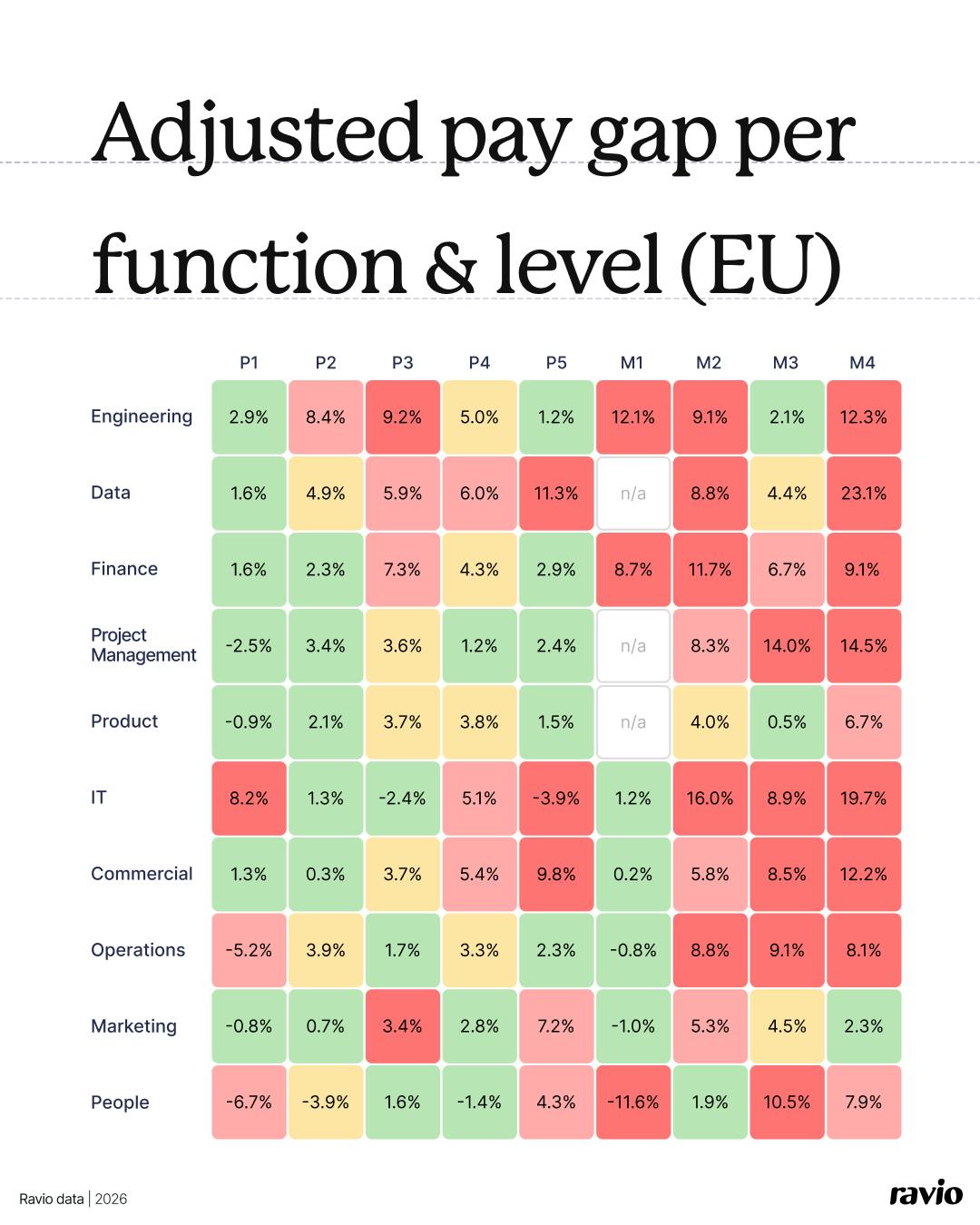
The Directive introduces more rigorous, standardised gender pay gap reporting across the EU, with a maximum 5% gender pay gap allowed for the company overall (unadjusted) and for any group of employees who perform equal work or work of equal value (adjusted) – and a requirement for objective justifications and remediation plans for any gaps above that.
So how do EU tech companies currently sit against that 5% threshold?
Well, almost every EU tech company can expect to exceed the 5% threshold when reporting their overall gender pay gap – across the 27 EU member states, the unadjusted gender pay gap currently sits at 18.8% (Ravio data, January 2026).
However, much of this can be justified through the adjusted analysis that the directive requires, by demonstrating that men and women in comparable roles are paid fairly.
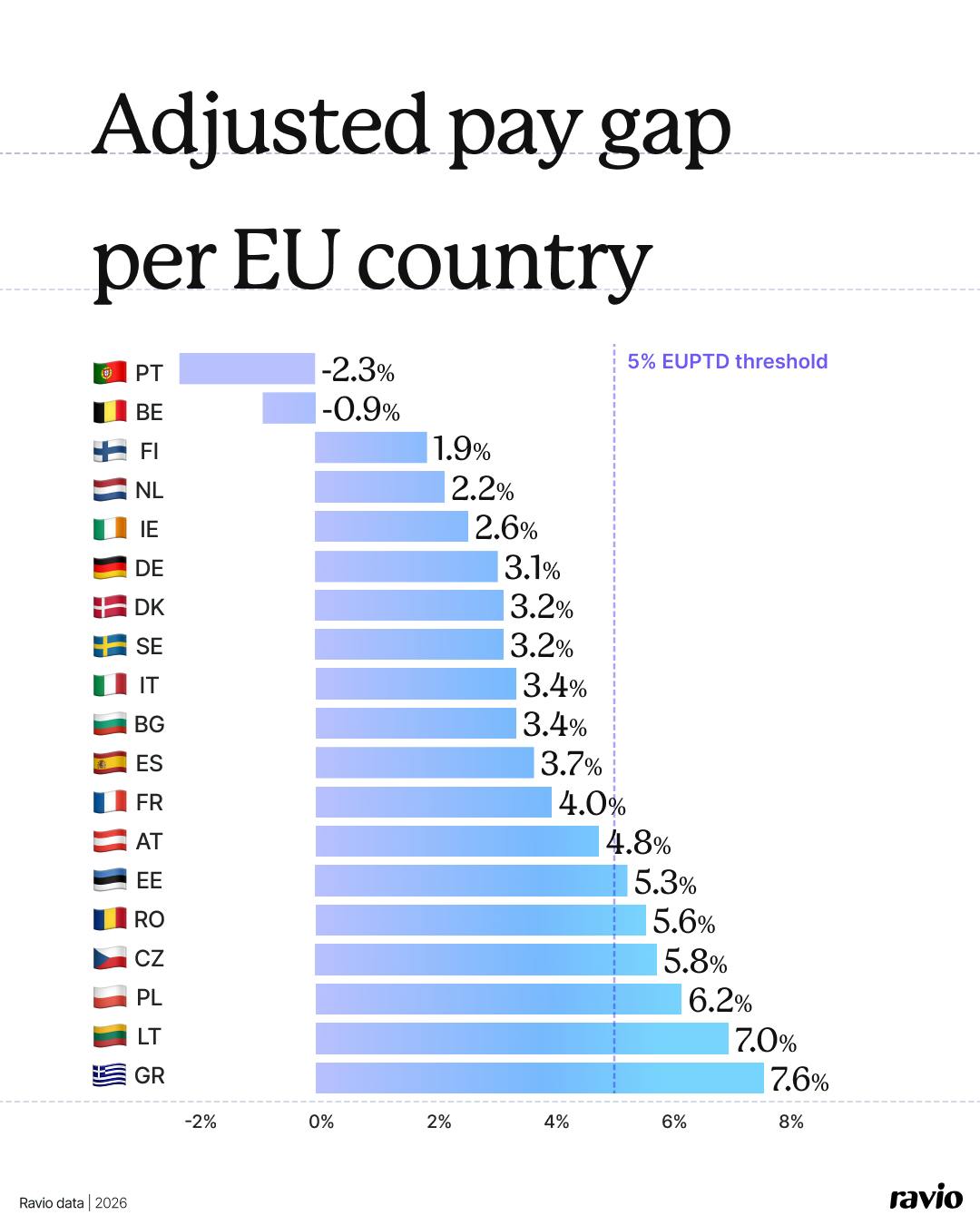
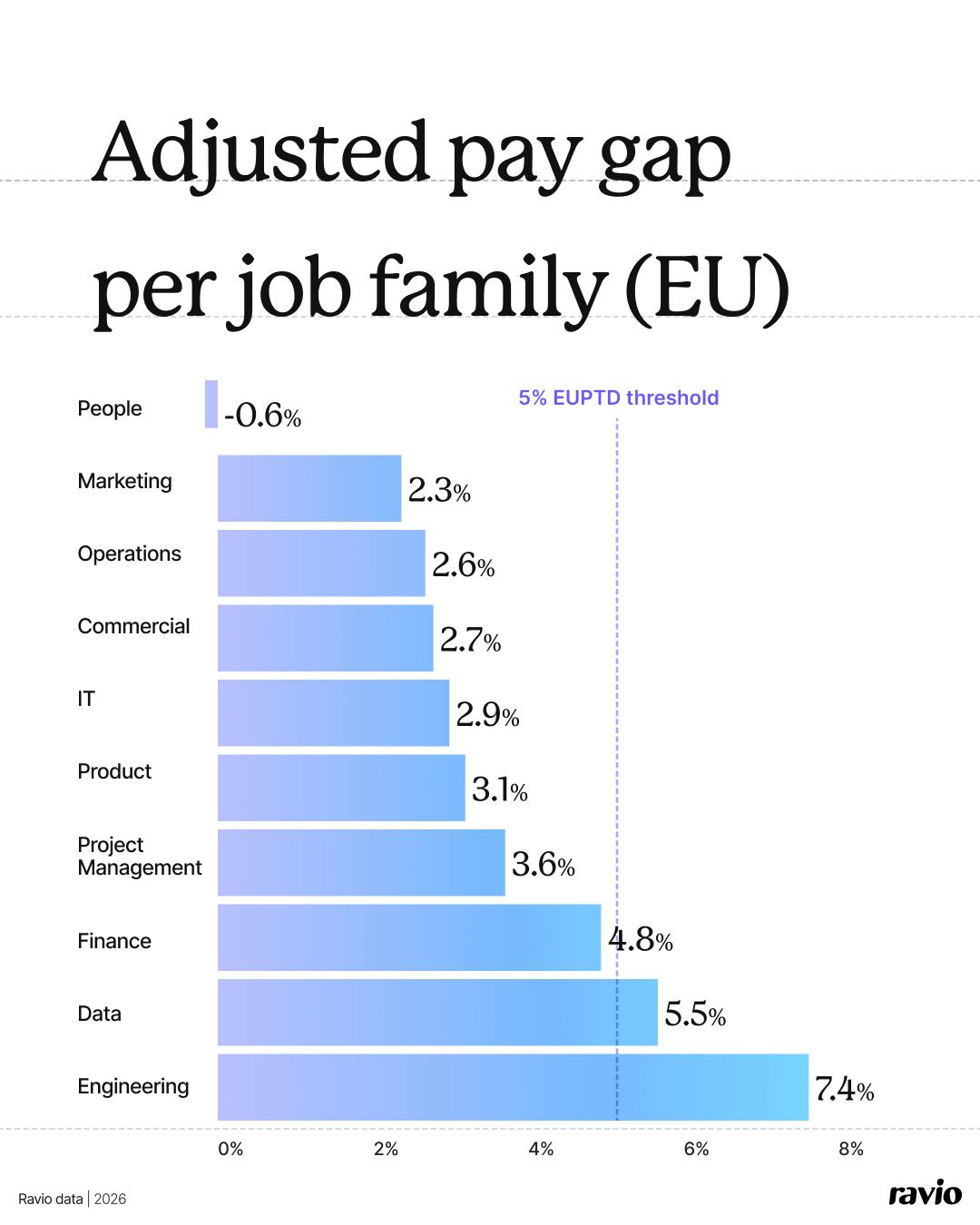
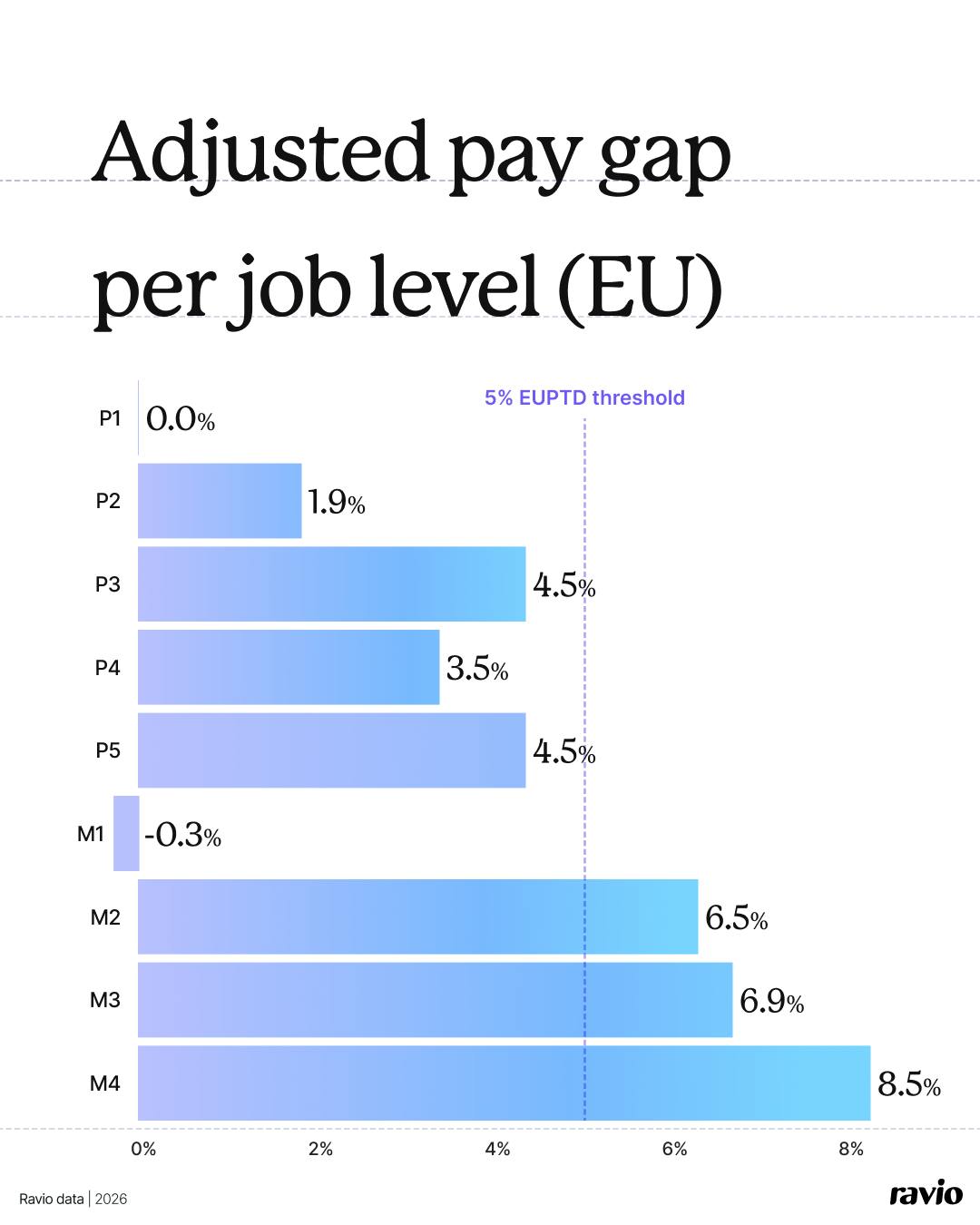
The more complex compliance question is: which specific employee groupings are likely to exceed the 5% threshold? This will be much more difficult to justify.
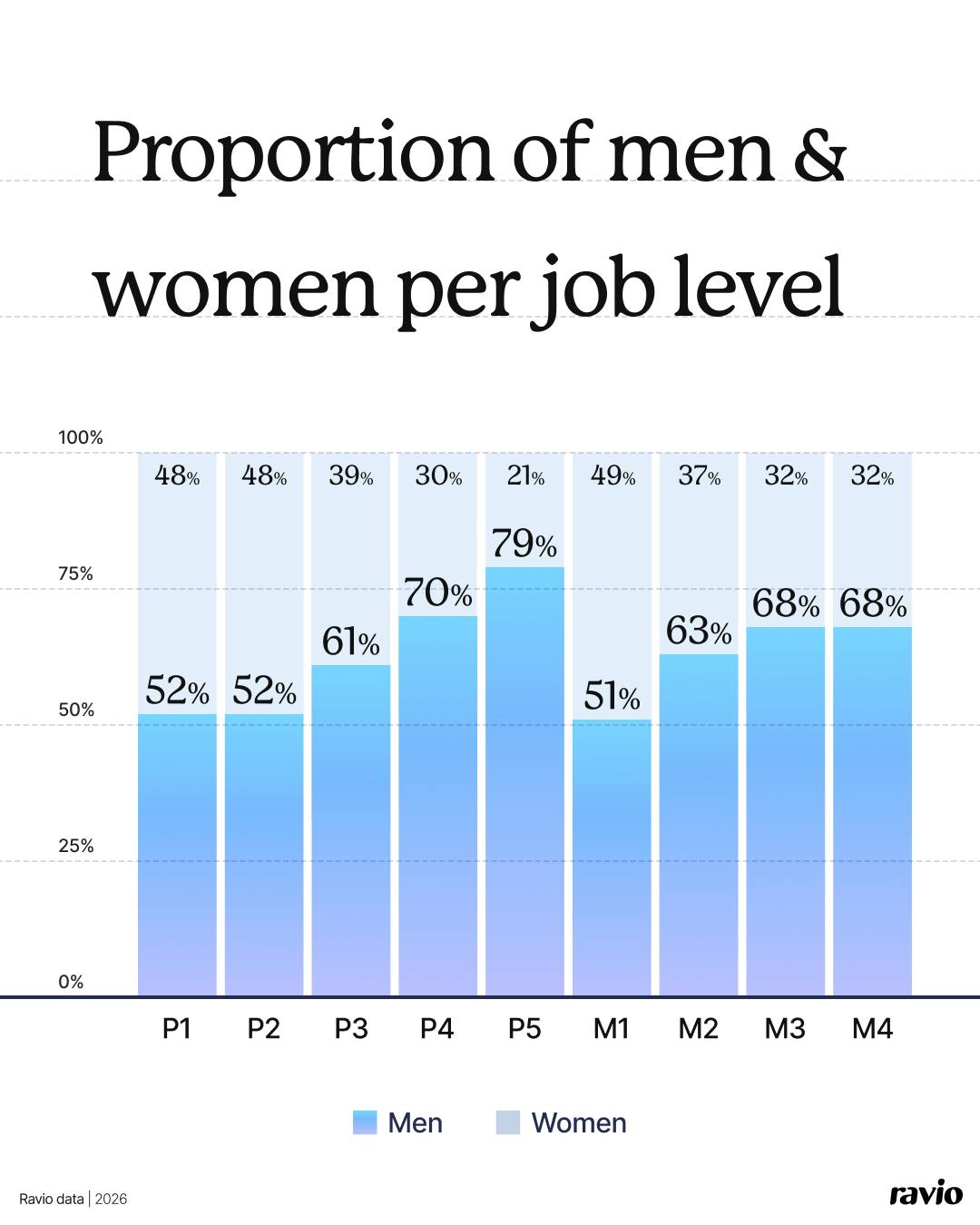
It’s hard to answer definitively because 'equal value' definitions will vary by company. But, as a starting point, we’ve analysed our data to find out where the highest-risk hotspots cluster in terms of functions and job levels.