New3x the coverage, same rigorous quality. 300 positions benchmarkedExplore

Comp strategy for Nordic leaders

Compensation strategy

Budgets are tighter. Headcount decisions are harder. And the pressure to stay competitive on pay, without just spending more is real.

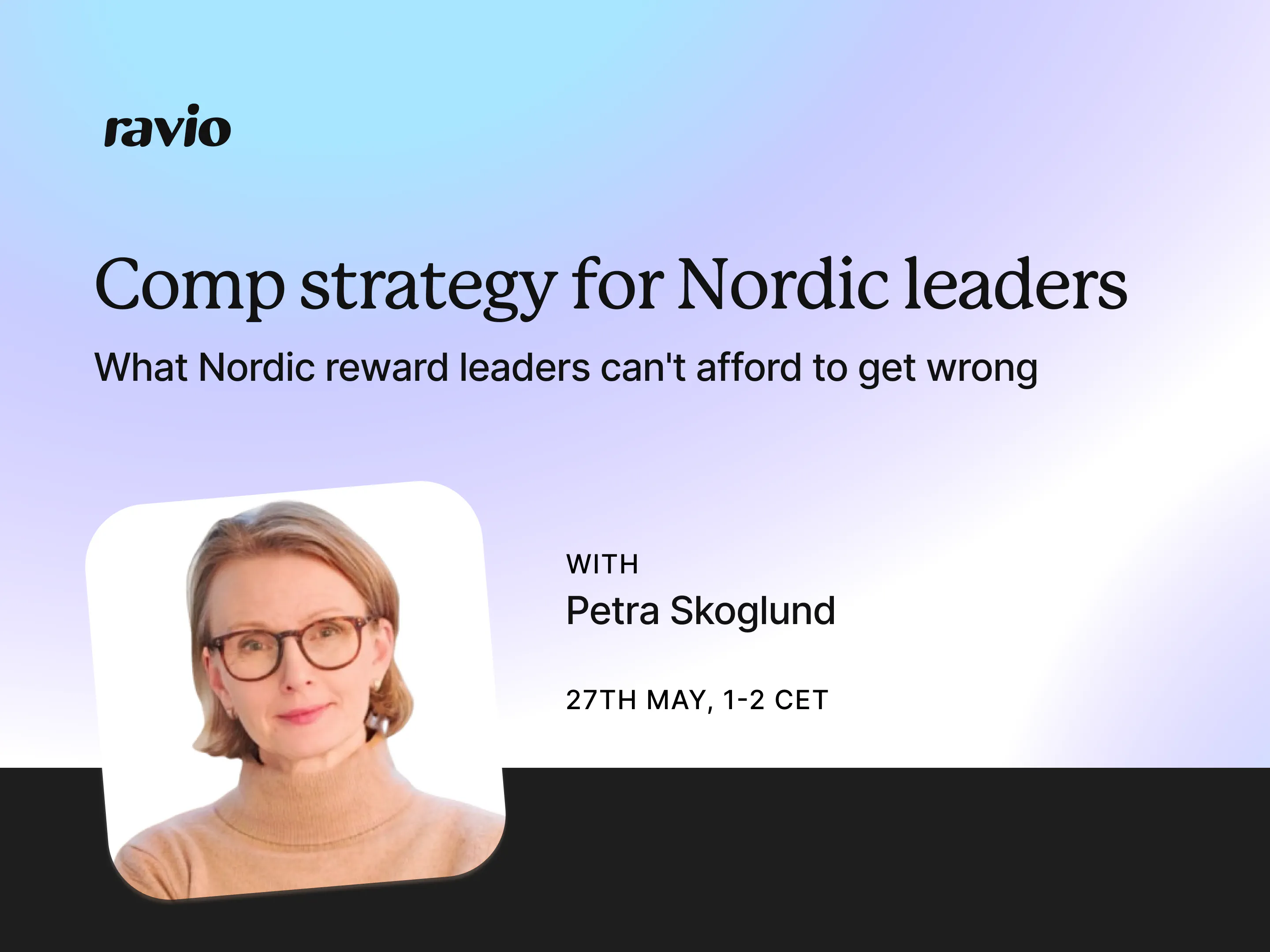
This webinar was for reward and HR leaders at Nordic companies navigating exactly this. We brought in Petra Skoglund (Senior HR Strategist at People by Cederfeldt) who spent last year working with 30+ clients across Sweden, the Nordics, and Europe on comp strategy, workforce planning, and getting leadership teams aligned on reward.

Topics we explored:

  • Connecting workforce planning to comp strategy in a way that holds up with the business
  • Defining what fair looks like during downsizing and restructuring
  • Aligning CFOs and HR and making the case for comp decisions at the top table
  • Rewarding fairly when pay increases aren't on the table

Catch up with the webinar on-demand

Key takeaways from the webinar

If you're more of a reader than a watcher, here are a few of the most interesting insights from Petra's session on pay differentiation in the Nordic model.

Key takeaway 1: The Nordic model was designed for differentiation — not against it

There's a common misconception that Nordic collective bargaining frameworks resist performance-based pay. In practice, the opposite is true.

In Denmark, individual evaluation is not just permitted – it's expected annually. In Finland, the IT Services Collective Agreement explicitly states that pay development should reflect individual competence and performance. Norway's Frontfag model sets a budget ceiling, but who gets more and who gets less is a local decision. Sweden has no pay ceiling at all.

In all four countries, the question isn't whether the system allows you to differentiate. It does. The question is whether you have the structure to do it consistently and defensibly.

Key takeaway 2: The median conceals as much as it reveals

Ravio's European compensation data shows that 77% of employees received no pay increase last year, while the average increase for those who did receive one stayed flat.

At the same time, AI and advanced tech roles command a 12% salary premium over comparable positions. A 5% median can mean 0% for the majority and 15% for a small group – and if you're distributing budget equally across all roles, you're almost certainly under-investing in the ones that matter most. Those people know their market value, because they're being approached constantly.

Key takeaway 3: Role prioritisation needs a framework, not instinct

Most organisations allocate pay review budgets as a flat percentage across divisions, anchored to the prior year or collective agreement norms.

What the best organisations do differently is separate the general budget from strategic investment – explicitly allocating more to the areas where they need to compete hardest for talent.

The Value Potential Score (a 0–100 role-level framework scored across strategic impact, replaceability, market scarcity, revenue proximity, and future demand) gives HR a structured, documented, union-defensible way to make those decisions. It's forward-looking by design: it asks about future value, not historical performance, and it's applied at role level, not person level.

Key takeaway 4: Most pay equity problems are structural, not intentional

When managers make pay decisions without a shared framework and without a calibration step, a predictable set of problems follow: inconsistency across teams, pay gaps that compound silently, and decisions that reward tenure and personality over future value.

The fix isn't cultural – it's structural. Calibration panels surface inconsistencies before decisions are communicated, and year-round pay dialogue means employees aren't sitting down in November with no context for a zero outcome. As the EU Pay Transparency Directive moves closer to implementation, having a framework you can explain and defend isn't optional. It's the foundation.

Get the Compensation Review straight to your inbox

Your monthly dose of market insights and expert perspectives

You might also like

Compensation strategyReward hours

How to approach employee relocation – the reward perspective

Amanda Moore (Senior Director, Reward, Performance and Analytics at Beyond ONE) and Liam Bax-Branagan (Director, Head of People Operations and Compensation at European Energy) discuss how to handle employee relocation from a reward perspective.

13 May 2026Read more